

Anurag Goel
Canny is a feedback-focused alternative to Productboard
Productboard is a complex product management tool with more configuration than most teams need. Customers frequently share that it’s a very steep learning curve to get going.
Canny is a flexible tool that’s both lightweight and powerful. It’s cost‑effective, quick to set up, and prioritizes features you’ll actually use.
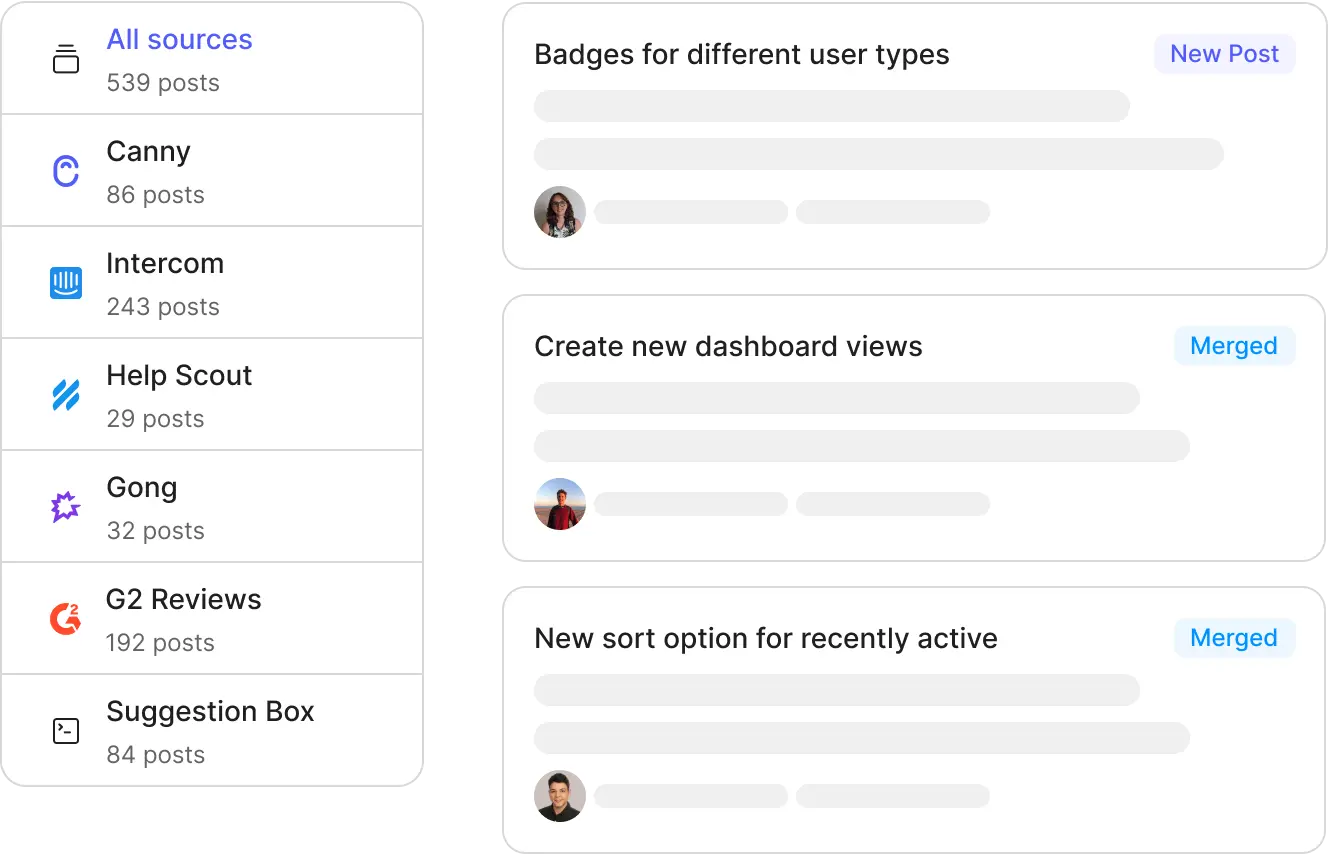






Table of contents
01
Quick look
02
A feedback system your team can learn in a day
03
A more developed feedback portal
04
Productboard captures the conversation. Canny captures the request.
05
See the revenue behind every request
06
Connect Canny to the AI tools you already use
07
Productboard’s AI is capable, but metered
08
Pricing without seat math and meters
09
Productboard does things Canny doesn’t
10
Switching from Productboard?
11
Frequently asked questions
Quick look: Why people prefer Canny over Productboard


Easy to set up and use
Most teams are running the same day they sign up.
Complex setup and a steep learning curve
Users describe complex navigation and an overwhelming feature set.
A portal built for your customers
Limit any board to specific customers, and let them see each other’s requests and your team’s replies.
Shared links and vote counts
Portals open through shared links, and customers see how many voted but not what anyone said.
Automatic, unlimited feedback capture
Autopilot extracts, deduplicates, and organizes feedback from your conversations, with no usage limits.
Raw transcripts, metered AI
Gong calls and support conversations are imported as transcripts and notes, and analyzing them spends monthly Spark credits.
Frontline teams log feedback where they work
Sales and support share what they hear from Salesforce, HubSpot, Slack, or Intercom, with unlimited contributor seats.
Contributor caps
Free contributors cap at 25 below Enterprise, and anyone who manages feedback needs a paid maker seat.
See the revenue behind every request
HubSpot and Salesforce account data shows which requests matter to your biggest customers and open deals.
HubSpot data lands as text notes
Productboard’s supported HubSpot path is a Zapier workflow, with no structured place for revenue data.
Closes the loop automatically
Publish product announcements through a built-in changelog and notify users about status updates.
Fewer ways to close the loop
No dedicated changelog. Closing the loop runs through roadmap card updates.
A feedback system your team can learn in a day
Productboard is a product management suite. Feedback is one input alongside strategy, OKRs, and release planning. Reviewers tend to say the same thing about the experience: navigation is complex and the feature set is overwhelming.
In Canny, feedback management is the whole product. There’s one job to learn, and the organizing happens for you. Most teams are running the same day they sign up.
That steep learning curve means that sales and support stop passing along what customers tell them, and the roadmap loses its best source. In Canny, they log feedback from Salesforce, HubSpot, Slack, or Intercom without leaving those tools, and contributor seats are unlimited, so nobody needs to learn a new tool.
"Liking Canny so far! [...] So much more dev-friendly than Productboard which is a bit over-engineered in terms of UX."

A more developed feedback portal
Canny lets you limit any board to specific customers, so beta programs and enterprise accounts get their own space. Productboard portals are shared by link, and their own docs note that portal SSO doesn’t restrict access.
Customers see each other’s requests in Canny, add their use case, and see your team’s replies, so feedback turns into a community. In Productboard, customers see how many people voted on a card, but not what anyone else said.
“Before Canny, we were using Productboard. We didn’t like it because it was lacking interaction with the community. So we started looking for a tool with a public roadmap where the community could interact with us and also between each other. It was really important for us – to give them a place where they can chat about feature requests and what’s missing in the product.”

Aurélien Georget
CPO at Strapi
Productboard captures the conversation. Canny captures the request.
Both products connect to Gong, Intercom, and Zendesk, but what arrives on the other side is different. In Productboard, a Gong call lands as a full transcript in your feedback repository. Productboard can then use Spark to analyze and connect that feedback to product work.
Canny Autopilot works differently. Every conversation arrives as feedback you can act on: each request extracted, deduplicated, sorted into your product areas, and tagged with your themes. You can open the original conversation behind every request for more context.
"Canny’s Autopilot ensures feature requests never fall through the cracks. We’ve seen an 80% increase in requests logged since introducing Autopilot."

Owen Doherty
COO at Orca Scan
Canny connects to more than 50 tools across support, sales, project management, analytics, and auth, including Linear, Jira, and GitHub for engineering. Productboard lists 25+ native integrations, and that list leaves out many important sources of feedback.





See the revenue behind every request
Canny connects to both HubSpot and Salesforce, so every request arrives tied to the customer who asked and the revenue behind them. Productboard can’t bring in your HubSpot deal data. Its supported path for HubSpot feedback is a Zapier workflow, and whatever you send arrives as a text note with no structured place for revenue to land.
Canny’s reporting shows:
- the pipeline behind open requests
- priority feedback next to renewal dates
- the revenue you’ve lost to features you didn’t build
Each number clicks through to the underlying requests, so you can defend it.
Connect Canny to the AI tools you already use
Canny has MCP connectors for Claude, ChatGPT, and more, so your AI assistant can answer customer questions straight from your feedback: which requests are trending, what churned accounts asked for, what the feedback behind a renewal says. Productboard’s MCP server is built around specs and delivery, connecting coding agents to product documents.
Productboard’s AI is capable, but metered
Spark is included on every Productboard plan, and it does a lot: feedback summaries, findings and opportunities, comprehensive reports, drafted specs. All of it runs on monthly credits. Their pricing FAQ puts analyzing 100 feedback items at around 30 to 50 credits, with specs at 50 to 200, all drawing from one pool per workspace. When it’s empty, the AI stops until next month or a $5 top-up. AI Themes, where you define a theme and their AI finds the matching feedback, is Enterprise-only on top of that.
Canny doesn’t meter feedback capture or organization. Autopilot also tags each new piece of feedback with the themes you define and reports how they trend over time.
Pricing without seat math and meters
Run the math on your own team. Productboard charges $59 per maker per month on Business (billed annually), and doesn’t publish Enterprise pricing. Procurement data from Vendr puts the median Productboard contract around $24,000 a year. Everyone who manages or prioritizes feedback needs a maker seat, and free contributors cap at 25 below Enterprise. AI credits are metered on top.
Canny’s plans include at least five admin seats, and contributor seats are unlimited. Contributors capture, edit, and organize feedback without a paid seat, and they can use Canny’s MCP server. Most teams can invite everyone without adding seat costs.
Teams switching from Productboard typically pay less with Canny. Most land on our Business plan, which adds SSO, CRM integrations, and more.
Productboard does things Canny doesn’t
It has RICE prioritization, strategy and OKR features, and release planning. Spark drafts PRDs and pushes specs to coding tools like Cursor. If that’s the job you’re looking to do, Productboard may fit better. Many Canny customers do this work in an LLM through our MCP server instead.
Switching from Productboard?
Teams that switch usually tell us two things: feedback piled up faster than anyone could sort it, and the people closest to customers stopped adding to it. Moving over is simpler than it sounds.
“The transition from Productboard to Canny was challenging but Canny’s flexible tagging structure made it way smoother than expected. We migrated all historical insights and kicked off with a clean slate and taxonomy going forward.”
Verified reviewer
Information Technology & Services, 201–500 employees, via Capterra
Canny is easy to learn and typically live in hours. Historical feedback is easy to import, and our team helps with migrations.
See Canny on your own feedback
Start free in minutes, or book a demo to see how Canny captures, prioritizes, and closes the loop with your customers.
Frequently asked questions
What’s the difference between Productboard and Canny?
Productboard is a product management suite with feedback as one input. Canny is built around feedback: it’s captured automatically, connected to revenue, and the loop closes when features ship. Optionally, customers can share feedback directly on your Portal. You get a consolidated view of all feedback in Ideas.
How is Canny’s feedback portal different from Productboard’s?
Both let customers vote and share feedback. Canny lets you limit boards to specific customers, while Productboard portals are shared by link. On Canny, customers see each other’s requests and discuss them. On Productboard, they see a vote count on each card but not what anyone else said. Canny’s Portal also includes AI tools like Smart Replies, which asks customers follow-up questions, and Comment Summaries, which condenses long threads.
Does Canny have AI like Productboard’s Spark?
Both products analyze feedback with AI. Spark summarizes feedback and generates findings, reports, and documents, metered by monthly credits. Canny’s Autopilot does the feedback work as it arrives: extracting each request, deduplicating it, filing it into the right product area, and tagging it with your themes. Canny’s reporting then connects feedback to revenue, so you can see what a request is worth without spending credits on the question.
Can I import my Productboard data into Canny?
Yes. Features become ideas with their statuses, tags, and hierarchy mapped to your boards and groups. Notes and insights come across linked to those ideas, or run through Autopilot so they’re triaged for you. Companies and users carry over with their votes. Note: export your data before your Productboard contract ends because access disappears that day.
Contact us to get started on your migration.
Why do teams switch from Productboard to Canny?
Most teams switch because they spend more time sorting feedback than acting on it. Here’s what we hear most often:
- Feedback piles up faster than anyone can sort it. In Productboard, someone has to read, tag, and merge feedback by hand. Canny Autopilot pulls feedback from Gong, Zendesk, and Intercom, then groups duplicates into ideas for you.
- Sales and support stop sharing feedback. Teams find Productboard hard to learn, so the people closest to customers don’t use it. With Canny, they can log feedback from Salesforce, HubSpot, or Slack without leaving the tools they already work in.
- It doesn’t fit their stack. Teams want native integrations with Linear, HubSpot, and Salesforce. They also want to work with their feedback in Claude or ChatGPT instead of being locked into one tool’s AI.
- They can’t see what matters to revenue. Canny connects feedback to account data from HubSpot and Salesforce, so you can see which requests matter to your biggest customers.
- Their AI runs on credits. Productboard’s AI comes with a monthly credit allowance. Once it’s used up, the AI stops until the next reset or until you buy more. Canny Autopilot has no credit limits.