
James McCubbin
Canny is a UserVoice alternative that’s easier to set up and use
UserVoice is an expensive, complicated tool with a lengthy onboarding process. There’s no way to try it without talking to sales first.
Teams often look at Canny as an alternative to UserVoice’s portal, and find better ways to capture and organize feedback. It’s self-serve, set up the same day, and free to try.
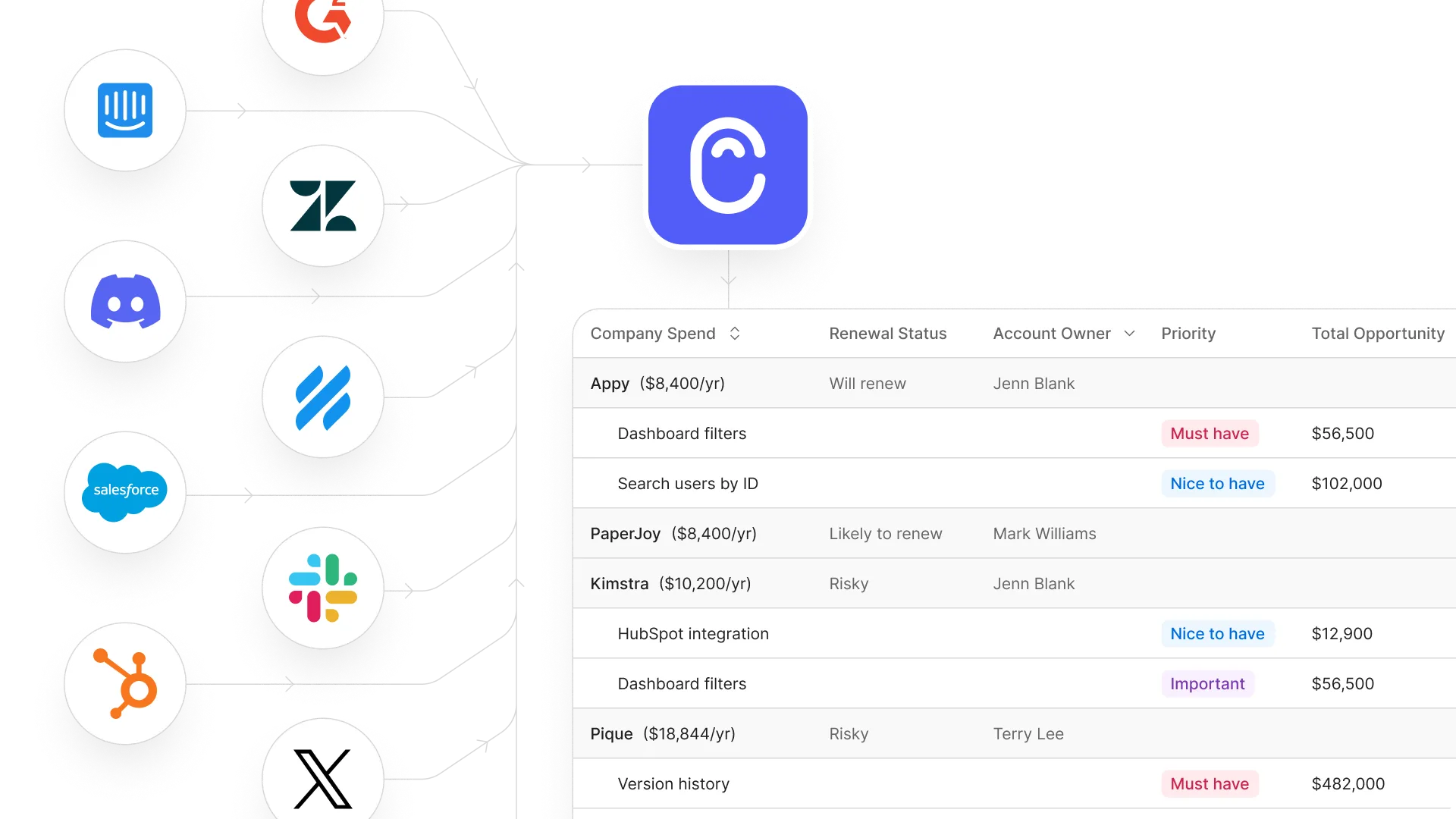
Table of contents
01
Quick look: Why people prefer Canny over UserVoice
02
Canny compared to UserVoice
03
A feedback portal that does more of the work
04
How Canny captures feedback UserVoice misses
05
Canny costs less and includes more
06
See the revenue behind every request
07
What integrations does UserVoice have? What about Canny?
08
What kind of company is each tool built for?
09
Switching to Canny from UserVoice
10
Frequently asked questions
Quick look: Why people prefer Canny over UserVoice


Easier to use
A clean, modern interface teams pick up quickly.
Steep learning curve
Their own reviewers describe a system that takes time to learn.
Live the same day
Sign up and start collecting feedback in minutes.
Four to six weeks to launch
Guided onboarding, and a sales call before you can try it.
Duplicates merge themselves
Autopilot merges duplicates as feedback arrives, on every plan.
Merge suggestions to review
Merge Matches suggests similar ideas for an admin to review and merge by hand.
AI follows up on requests
Smart Replies asks customers follow-up questions to get the detail you need.
Follow-up is manual
Getting more detail from a customer means someone on your team asking by hand.
AI captures feedback for you
Autopilot reads your sales and support conversations and public reviews, and organizes the requests for you.
Missing key sources
UserVoice can capture feedback, but its integration library is thin, with no Google Meet, Zoom, Intercom, Help Scout, or review sites.
Transparent pricing
Published plans and business contracts well below UserVoice’s.
Quoted pricing
Median contract is $16,719 a year, per Vendr procurement data.
Canny compared to UserVoice
UserVoice is one of the oldest user feedback tools on the market, and its pricing and implementation reflect that. Their own customers say it’s a steep learning curve.
"We were looking for an affordable customer feedback solution with a clean interface, simple usability, and the feature set we needed. Canny came out on top over UserVoice."

Both tools made their names on feedback boards, and Portal is still a core part of Canny. Customers share feedback, vote, and follow progress, the same way they do on UserVoice.
A feedback portal that does more of the work
Canny’s Portal is clean, modern, and quick to set up. Most teams have it live the same day, without a sales call.
"Getting Canny set up couldn’t have been easier. We started with a blank canvas and allowed our users to paint the rest."

Zeb Evans
Founder, CEO at ClickUp
Canny also handles duplicates for you. When a customer submits feedback that already exists, Autopilot merges it automatically. In UserVoice, Merge Matches suggests similar ideas for an admin to review and merge by hand.
Portal also offers AI support, like Smart Replies. When a request is missing detail, it asks the customer follow-up questions, so you get the use case without chasing the customer.
How Canny captures feedback UserVoice misses
Plenty of feedback never reaches a feedback portal. It comes up on a sales call or in a support conversation, and it stays there unless somebody writes it down.
Autopilot captures it for you. Connect Intercom, Zendesk, Gong, Google Meet, Zoom, Slack, G2, Capterra, and dozens more. Autopilot pulls out every feature request and files it alongside feedback from Portal, with the customer and revenue attached. It’s included on every plan, with no limit on how much it reads.
"Canny’s Autopilot ensures feature requests never fall through the cracks. We’ve seen an 80% increase in requests logged since introducing Autopilot."

Owen Doherty
COO at Orca Scan
UserVoice’s documented way for teams to capture feedback is a browser extension, where someone highlights feedback in a conversation and submits it by hand.
In Canny, the people who hear feedback don’t need an extension. Sales and support can log it from Salesforce, HubSpot, Intercom, or Slack without leaving those tools. Contributor seats are unlimited, so nobody has to learn a new tool to pass along what a customer said.
Autopilot also files every request into the right product area as it arrives. UserVoice’s AI suggests labels only after your team has applied each one by hand to at least five ideas, and someone still approves each suggestion.
Canny costs less and includes more
UserVoice doesn’t publish pricing. Procurement data from Vendr puts the median contract at $16,719 a year. For enterprise deployments, onboarding and professional services can add $2,000 to $10,000 or more in the first year.
Canny publishes its pricing, with most core capabilities included on every plan. There are no onboarding fees, contributors are unlimited, and you can cap what you spend.
With UserVoice, you’re looking at a five-figure median contract and a four-to-six-week launch before you know whether your team will use it. With Canny, you find out first.
See the revenue behind every request
Canny syncs account data from Salesforce and HubSpot, or takes revenue data via API, so the number on every request is current. UserVoice connects to Salesforce too, but teams tell us the ARR it pulls in is inconsistent, which breaks prioritization.
Canny’s reporting shows:
- the pipeline behind open requests
- priority feedback next to renewal dates
- the revenue you’ve lost to features you didn’t build
Each number clicks through to the underlying requests, so you can defend it.
Before a call, open the account and see everything they’ve asked for. Canny tracks feedback by company and by user, so you can easily follow up with their requests. Sales and CS see the same view inside Salesforce or HubSpot and can add feedback from there. Requests from churned and closed-lost accounts are preserved so the revenue you lost to a missing feature stays visible.
Exports and reporting fill a whole category of requests on UserVoice’s own feedback forum. In Canny, these reports come standard.
What integrations does UserVoice have? What about Canny?
Canny connects to more than 50 tools:
- feedback capture sources like Intercom, Gong, Google Meet, G2, and Zoom
- CRMs including HubSpot and Salesforce
- project management tools like Jira, Linear, Asana, and ClickUp, so status updates flow back to customers automatically
- AI assistants through MCP








UserVoice’s integrations library lists about ten tools and leaves out a lot of the places feedback shows up. Google Meet, Zoom, Intercom, Help Scout, and review sites like G2 and Capterra are all missing.
What kind of company is each tool built for?
UserVoice is built for large organizations with formal governance and the budget and time for lengthy implementation. At that scale, it’s a credible choice.
Canny works at that scale too. Enterprises like CircleCI and ClickUp use it, and you’ll find what enterprise teams look for: SOC 2 Type II, SSO, and CRM integrations. Canny works on day one, no matter your company’s size.
Switching to Canny from UserVoice
Currently a UserVoice customer? Make the switch—it’s easy and free.


We can migrate all of your data from UserVoice to Canny within 48 hours. Reach out to us to get started.
See what Canny finds in your feedback
Sign up and connect a feedback source, or book a demo and we’ll show you Canny running on your own data.






Frequently asked questions
How much does UserVoice cost?
UserVoice doesn’t publish pricing. Procurement data from Vendr puts the median contract at $16,719 per year. Contracts range from roughly $10,000 to $56,000 depending on feedback volume and integrations. For enterprise deployments, onboarding and professional services can add $2,000 to $10,000 or more in the first year.
Does UserVoice have a free plan?
No. UserVoice offers a 30-day trial, but only after a sales demo, and there’s no self-serve signup. Canny publishes its plans, and you can start on any of them without talking to sales.
Can UserVoice capture feedback from sales calls?
UserVoice doesn’t list Zoom or Google Meet among its integrations. The documented tool for team capture is a browser extension, which lets your team “capture feedback on behalf of customers.” Canny’s Autopilot reads Gong, Zoom, and Google Meet call transcripts, extracts feature requests, and attaches the customer and their revenue automatically.
Does UserVoice integrate with Intercom or Help Scout?
No. UserVoice’s documented integrations don’t include Intercom or Help Scout. Both are Autopilot sources in Canny, so feedback shared in support conversations is captured automatically.
How long does UserVoice take to set up?
UserVoice’s pricing page says most teams launch in four to six weeks, including one to two weeks of technical setup. Canny is self-serve, and most teams are running the same day they sign up.
How do we keep up with replying to everyone?
Changing a status notifies every voter at once, and the changelog tells customers what shipped. When you need more detail from someone, Smart Replies asks the follow-up questions for you, and comment summaries catch you up on a long thread. Teams moving from UserVoice usually say getting back to people was the part they had fallen behind on.
Why do teams switch from UserVoice to Canny?
Most teams tell us UserVoice stopped keeping up. Ideas pile up, nobody has time to sort them, and the portal goes stale. Here’s what we hear most often:
- Too many ideas, not enough time. PMs get buried in submissions and stop checking. Canny Autopilot groups duplicates and pulls feedback in from Gong, Zendesk, and Intercom, so the pile stays manageable.
- Revenue data they can’t trust. Teams tell us UserVoice pulls in ARR from Salesforce inconsistently, which breaks their prioritization. Canny syncs account data from Salesforce and HubSpot, so you can see which requests matter to your biggest customers.
- No view of a single customer. Before a call, you want to know what that account has asked for. Canny tracks feedback by company and user, so it’s one click away.
- Sales and support stop using it. Canny lets them log feedback from Salesforce, HubSpot, or Slack without opening another tool.
- It doesn’t fit their stack. Canny connects to Linear, Jira, and Asana, so status updates flow back to customers automatically.
How do I migrate from UserVoice to Canny?
Canny’s team handles the migration. Forums become boards, suggestions become ideas with their categories, statuses, and tags, and supporters become votes. Comments and users are preserved. Users are matched by email and see their ideas and votes the next time they sign in. Migration can be done within 48 hours.
Contact us to get started on your migration.